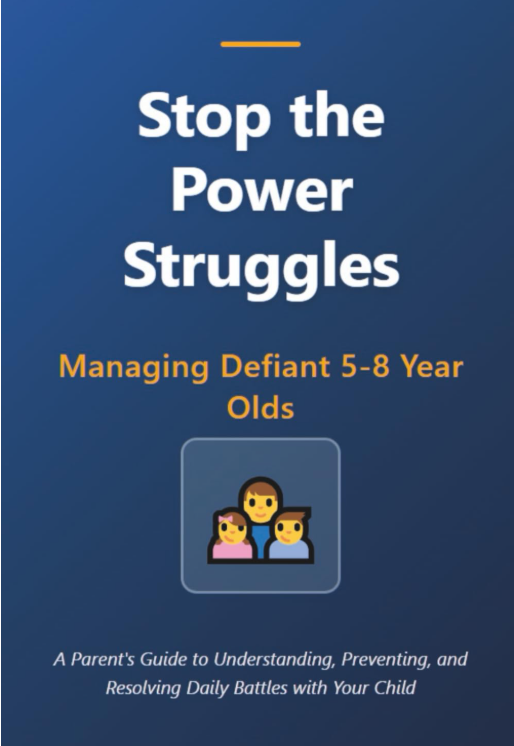

Between 5 and 8, children are developing strong opinions, bigger feelings, and a sharper sense of fairness. They want control, but they don’t yet have the skills to manage frustration, disappointment, or tiredness. Defiance often spikes when kids feel overwhelmed, unheard, hungry, overstimulated, or uncertain about expectations. Sometimes it’s also a form of connection: negative attention is still attention.
GET YOUR COPY HERE
Preventing battles before they start
Most power struggles are predictable. The trick is to get ahead of them.
Set clear, simple expectations. Kids cooperate more when rules are short and repeatable: “Shoes by the door,” “Hands are for helping,” “Homework before screens.”
Offer choices that work for you. Choice gives a child a sense of control without giving up your authority:
“Do you want to brush teeth before or after pajamas?”
“Red cup or blue cup?”
Build routines. Morning, homework, and bedtime routines reduce the need for constant decisions. Fewer surprises = fewer fights.
Notice and name good behavior. Catch them being cooperative and say it out loud:
“I saw you put your toys away when I asked. That was responsible.”
Positive attention fuels repeat behavior.
Resolving defiance in the moment
When defiance hits, your calm is the steering wheel.
Stay neutral and steady. Arguing raises the stakes. Instead of a lecture, try a calm repeat:
“I hear you don’t want to. The rule is still the rule.”
Connect before you correct. A quick empathy line lowers resistance:
“You’re upset because you want more playtime. I get it.”
Then hold the limit:
“It’s still bedtime.”
Use natural or logical consequences. Avoid punishments that feel random. Make consequences match the behavior:
“If markers are used on the wall, they take a break for today.”
“If you can’t walk safely, we leave the park.”
Know when to disengage. If the moment is spiraling, pause:
“We’re both frustrated. We’ll talk when we’re calm.”
This teaches emotional regulation, not submission.
What “winning” really looks like
The goal isn’t to make your child obey instantly. It’s to teach them how to handle limits, solve problems, and manage big feelings. Defiance is a skill gap dressed up like attitude. When you respond with clarity, empathy, and consistency, your child learns: my feelings are okay, and boundaries still exist.
Power struggles fade when kids feel respected, guided, and secure in your leadership. You don’t need to out-shout defiance; you need to outlast it—with calm, predictable parenting that turns daily battles into daily growth.
Get your copy now and start experiencing more cooperation and less conflict today